Characteristics
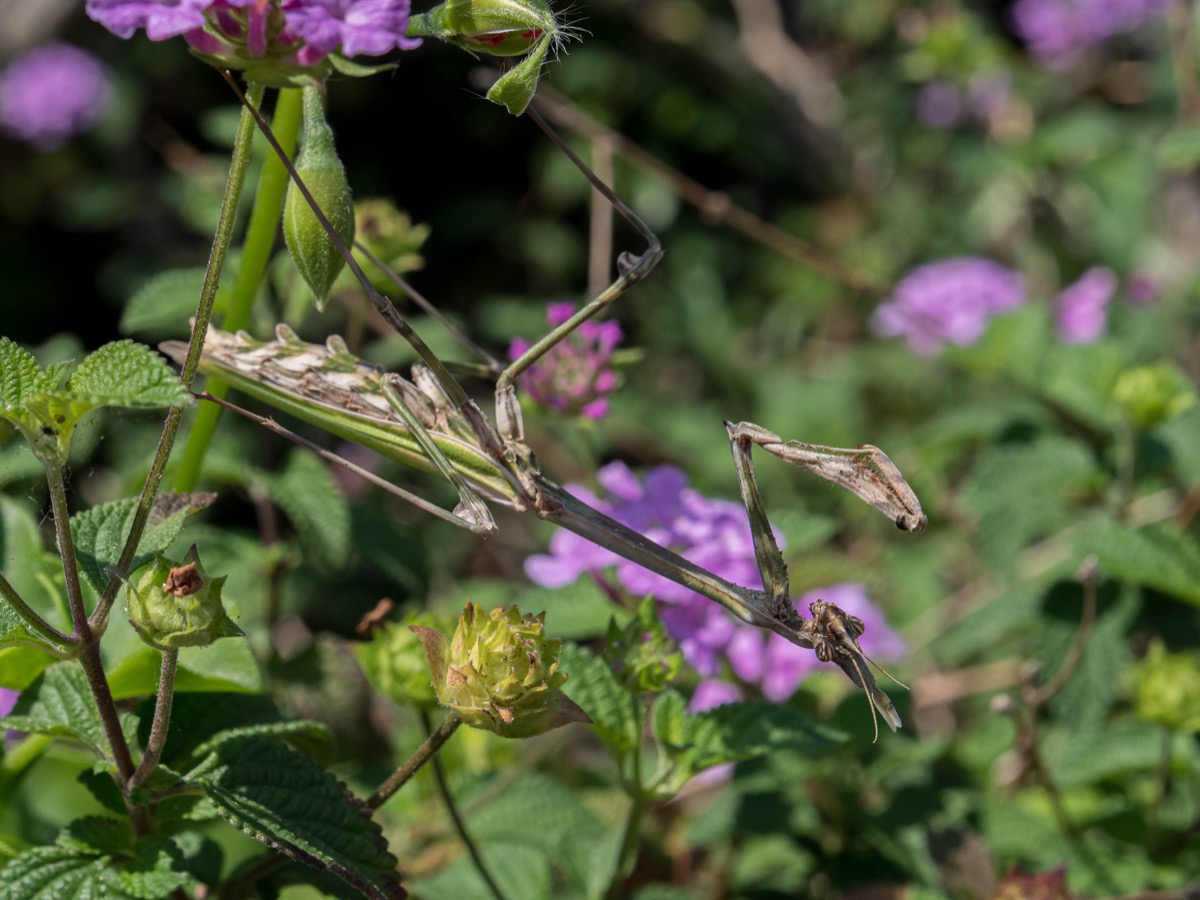
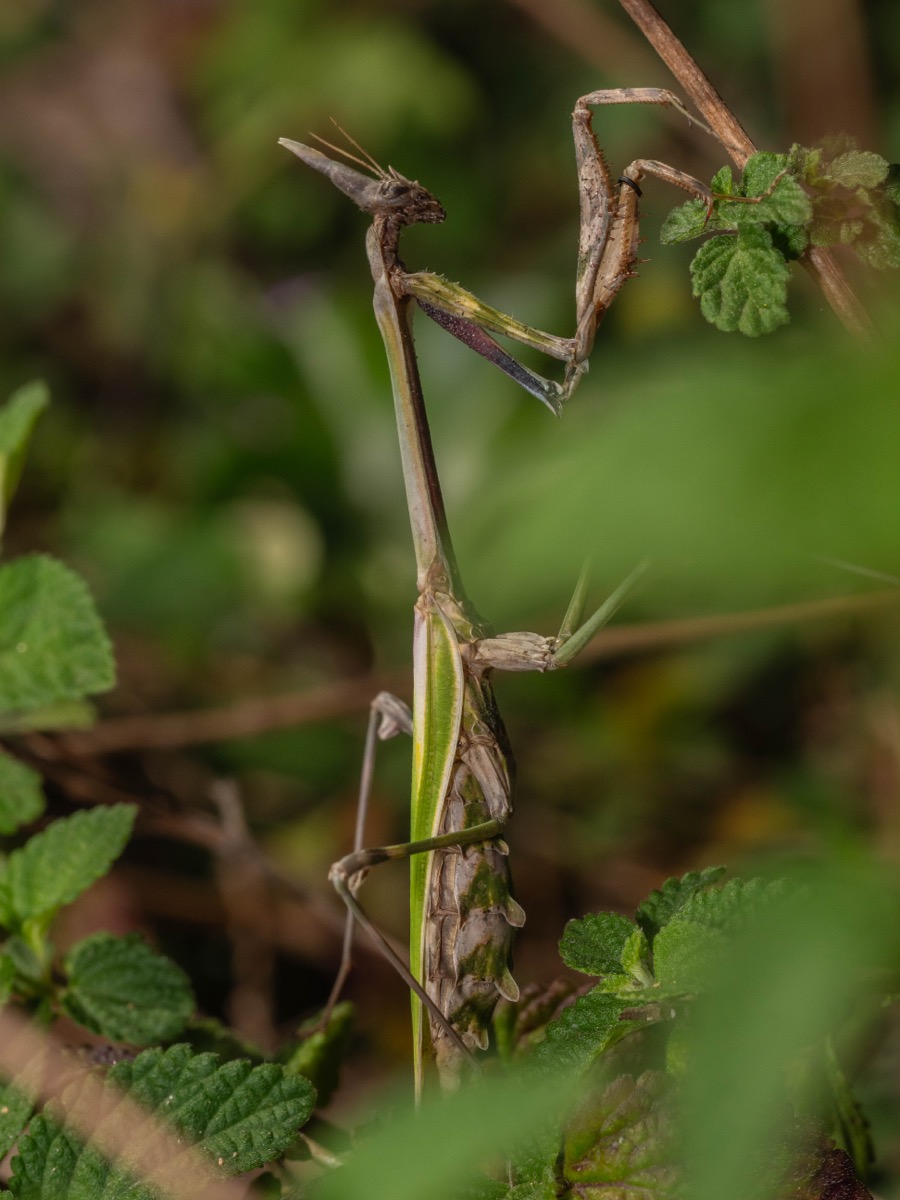
- Very slender body with leafy extensions
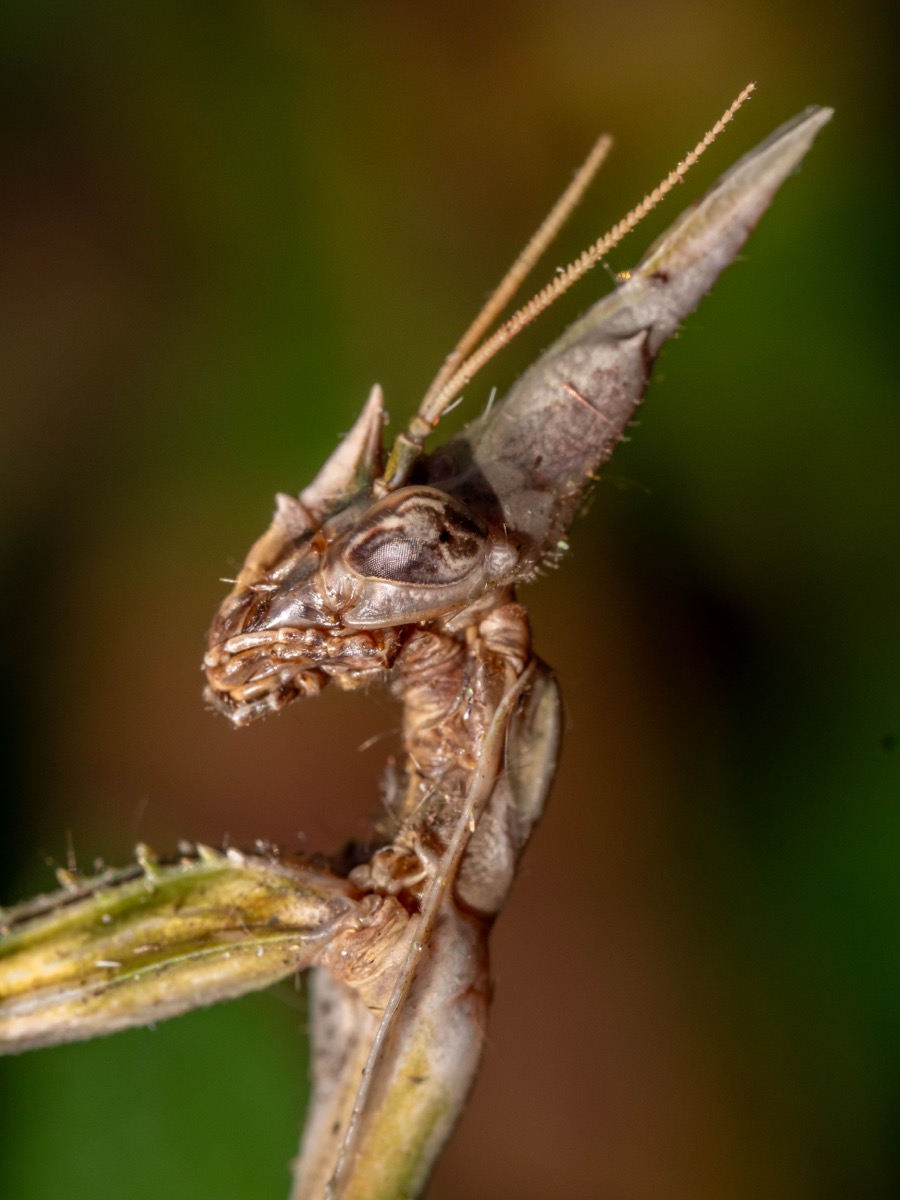
- Cone-shaped protrusion on the head
- Well-developed raptorial forelegs, spiny and dentate
- Very long prothorax allowing wide head mobility
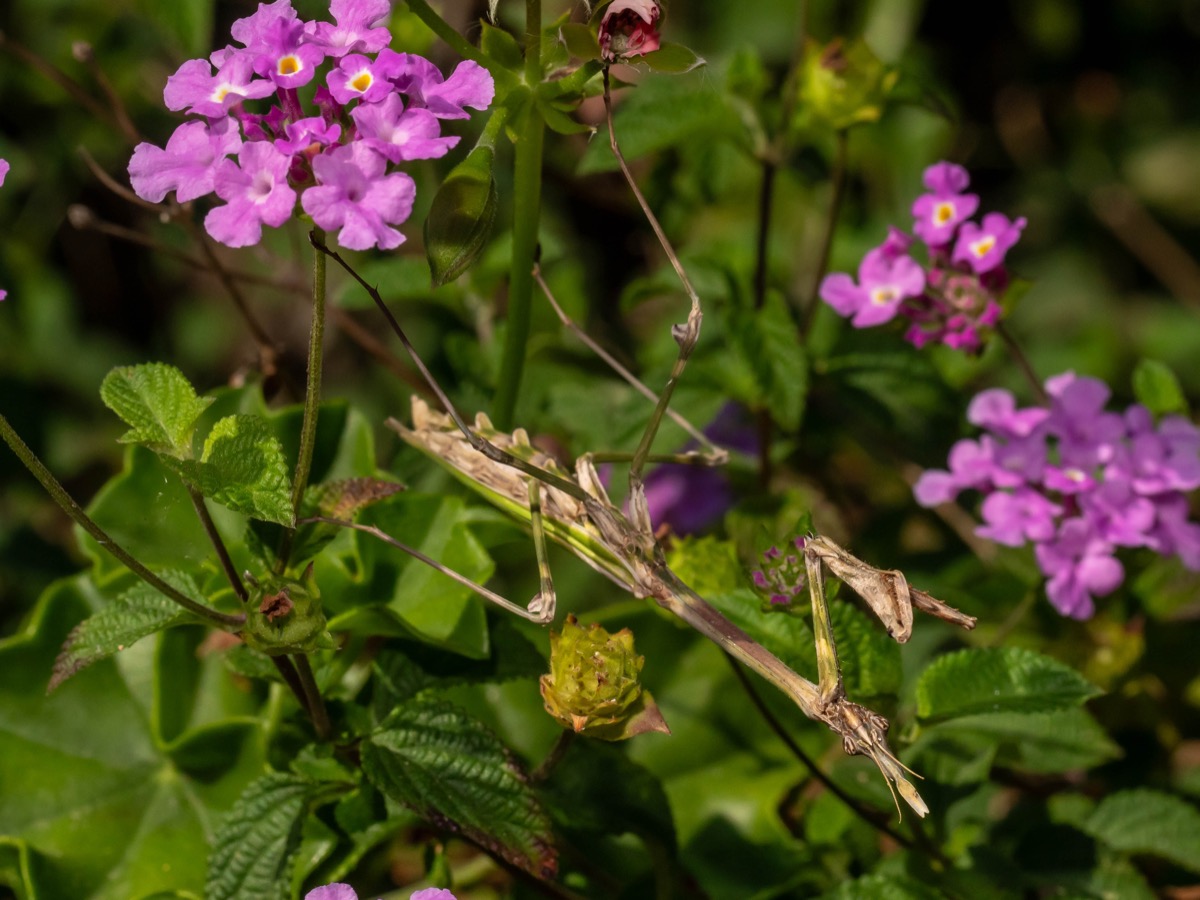
- Mimetic colors: beige, brown, pale green
- Feathery antennae in males, threadlike in females
Habitat
Empusidae are found in:
- Dry fallow fields, garrigue, scrub
- Embankments, pathsides, sunny edges
- Mediterranean or arid regions
- Low vegetation (herbs, dry bushes)
Biology
- Strict predators, ambushing prey in vegetation
- Diurnal activity, often motionless in ambush posture
- Sexual reproduction, sometimes followed by sexual cannibalism
- Ootheca laid on vegetation, rocks, or solid structures
- Hemimetabolous development (successive molts)
Flagship species
- Empusa pennata – Found in southern Europe (Spain, southern France, Italy), recognizable by:
- Very slender silhouette
- Cone-shaped cephalic extension
- Feathery male antennae
- Spectacular camouflaged postures
Special Features
- Exceptional camouflage, mimicking twigs or dry grass
- Distinctive motionless postures
- Slow, cautious movements except when striking prey
- Often protected or monitored species in Europe
Genus Empusa
Empusa pennata
| Order | Mantodea |
| Family Mantodea | Empusidae |
| Genus | Empusa |
| Species | pennata |
| Common name | Conehead mantis |
| Identifier | Thunberg |
| Year of description | 1815 |
| IUCN Category (2001–2003) | Not classified |
| Color | brown – green |
| Min size (mm) | 50 |
| Max size (mm) | 67 |
| Period start | May |
| Period end | August |
| Range | Mediterranean Basin |