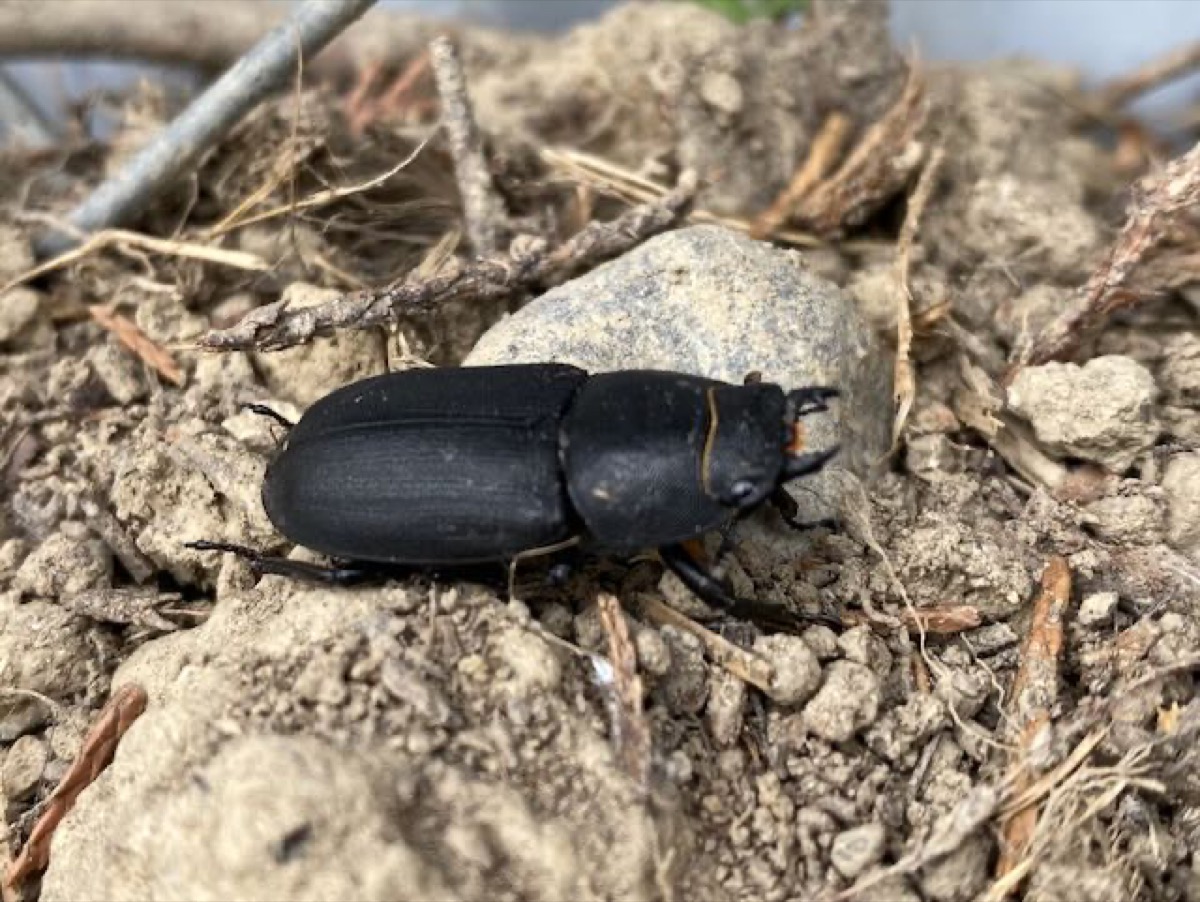
The Lucanidae – Stag Beetles
The Lucanidae, also known as “stag beetles” or “flying deer beetles”, are a family of beetles characterized by their enlarged and often spectacular mandibles, present in the males of many species. Here is a summary of the main features and aspects of the Lucanidae:
Characteristics
Impressive mandibles:
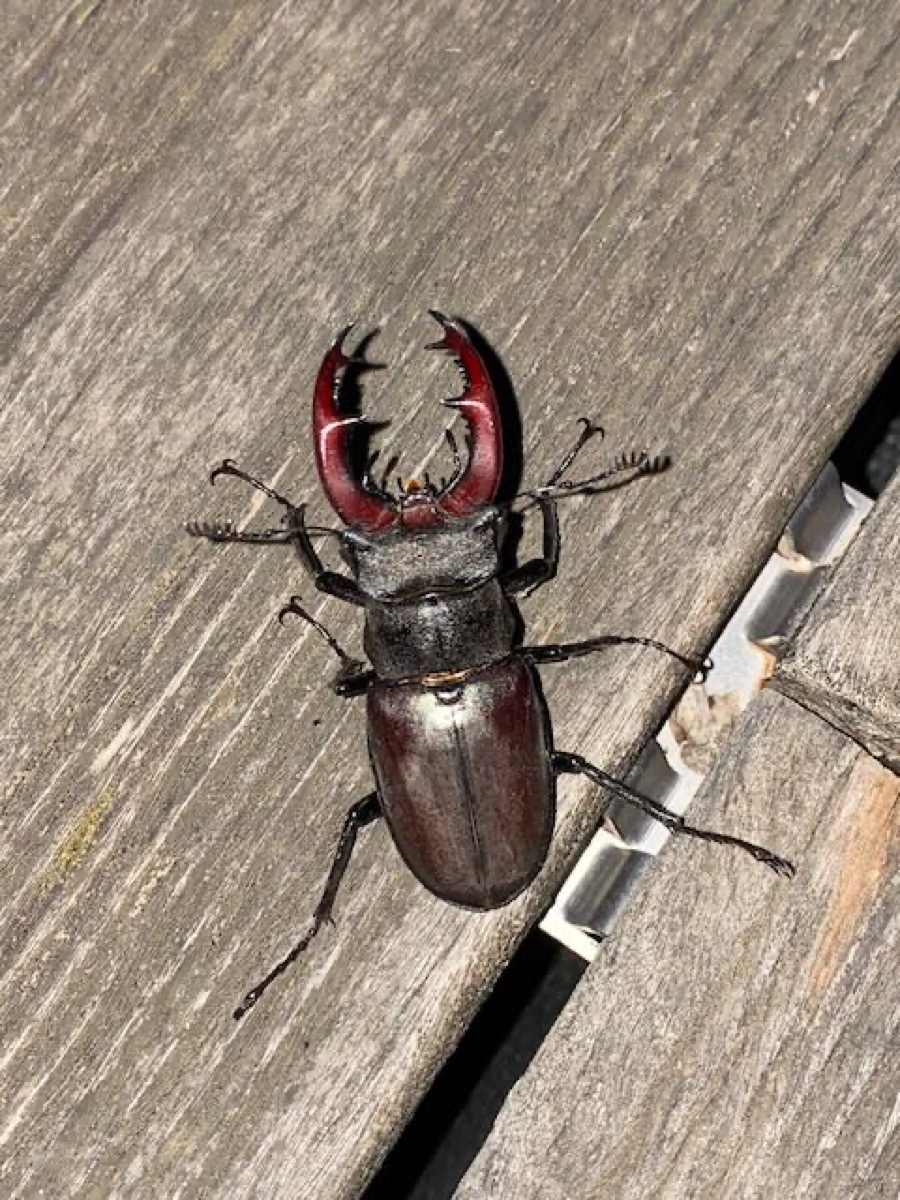
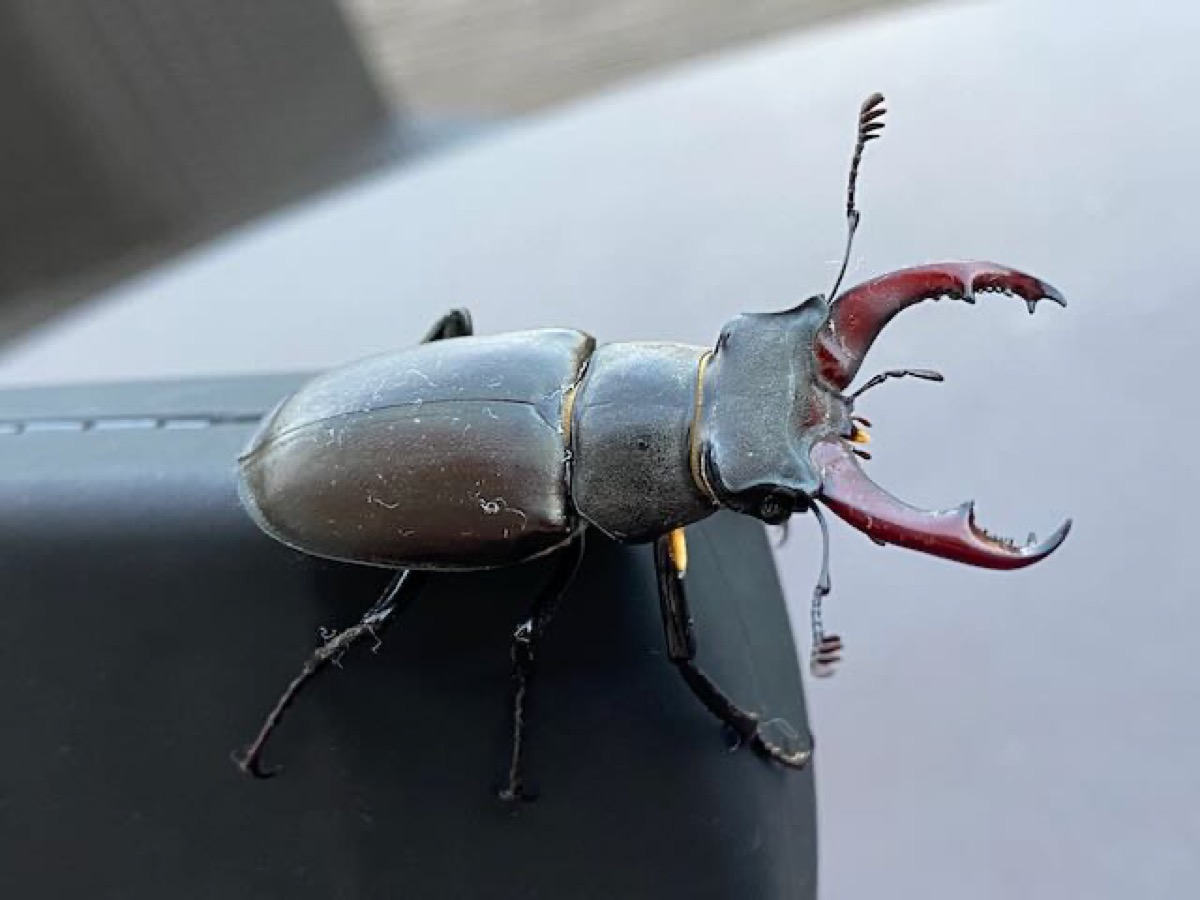
Males of most Lucanidae species have enlarged and sometimes highly elaborate mandibles. These mandibles vary in shape and size, often adapted for fighting other males during mating competitions or defending resources.
Sexual dimorphism:
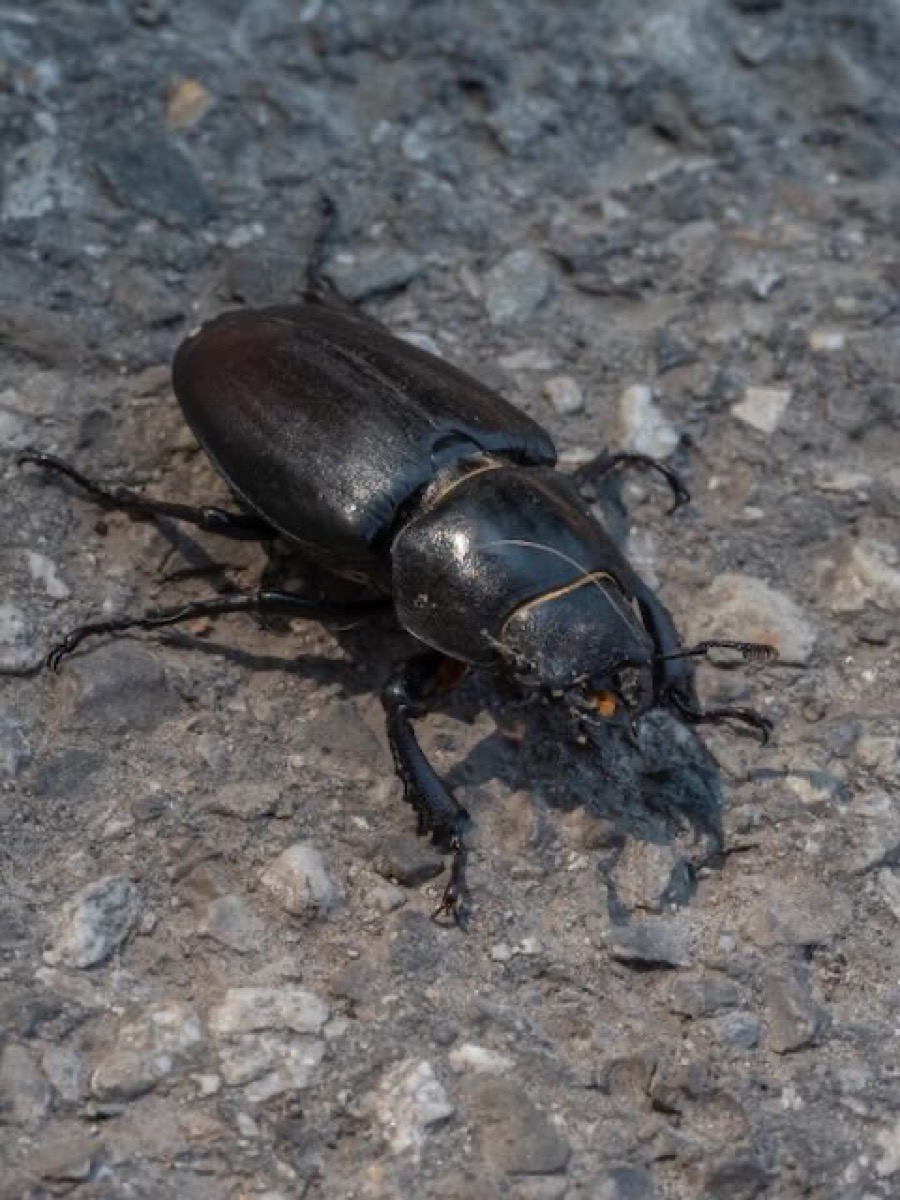
The males’ mandibles are generally much larger than those of females. Females have much smaller and more functional mandibles, used for activities such as digging and feeding.
Diet:
Adult stag beetles feed mainly on sap, fruits, and decaying plant matter. The larvae develop in decaying wood, feeding on organic material.
Life cycle:
Lucanidae go through several developmental stages: egg, larva, pupa, and adult. Larvae typically develop in decomposing substrates such as dead wood or forest litter.
Habitats:
Stag beetles are found in a variety of habitats, including forests, woodlands, and temperate regions. They are generally associated with wooded environments.
Courtship and mating behavior:
Males of certain stag beetle species use their mandibles in elaborate courtship displays when competing for females. The mandibles can be used to grab and maneuver rivals during these interactions.
Ecological role:
By feeding on decaying plant matter and burrowing into dead wood, stag beetles play an important role in nutrient recycling and the decomposition of organic matter, contributing to the balance of forest ecosystems.
Aesthetic and cultural interest:
Due to their impressive mandibles and striking appearance, stag beetles are often admired for their beauty and are sometimes considered emblematic insects in certain cultures.
Lucaninae (subfamily)
Aid for distinguishing between the female European stag beetle (Lucanus cervus) and the lesser stag beetle (Dorcus parallelipipedus) is available on the Swiss Faunal Mapping Centre (CSCF) website.
Genus Lucanus
Lucanus cervus – European Stag Beetle
| Order | Coleoptera |
|---|---|
| Family | Lucanidae |
| Genus | Lucanus |
| Species | Cervus |
| Common name | European Stag Beetle |
| Identifier | Linnaeus |
| Year identified | 1758 |
| Protected | Protected |
| IUCN category (2001-2003) | NT (Near Threatened) |
| Habitat | |
| Diet | |
| Color | |
| Antennae | |
| Pronotum | |
| Elytra | |
| Legs | |
| Range | Europe |
| Min size | 80 |
| Max size | 90 |
| Period start | |
| Period end |
Genus Dorcus
Dorcus parallelipipedus – Lesser Stag Beetle
| Order | Coleoptera |
|---|---|
| Family | Lucanidae |
| Genus | Dorcus |
| Species | Parallelipipedus |
| Common name | Lesser Stag Beetle |
| Identifier | Linnaeus |
| Year identified | 1758 |
| Protected | Not protected |
| IUCN category (2001-2003) | LC (Least Concern) |
| Habitat | |
| Diet | Deciduous wood |
| Color | Black |
| Antennae | Elbowed, ending in a club (comb-toothed) |
| Pronotum | |
| Elytra | Matte and granular |
| Legs | Tibiae with a single spine |
| Range | Europe |
| Min size | 20 |
| Max size | 32 |
| Period start | June |
| Period end | September |