The Cerambycidae – Cerambycids – Longhorns
The Cerambycidae family (Cerambycids – Longhorns or Capricorn beetles) – Latreille 1802 – includes an enormous number of genera. According to Wikipedia, there are 5,000 genera and 34,000 species spread across 13 subfamilies!
Characteristics
- elongated body
- parallel elytra
- long antennae, often longer than the body
- non-filiform, complex, segmented antennae
Members of the Cerambycidae family – Cerambycids – Longhorns live in old trees and especially in dead wood.
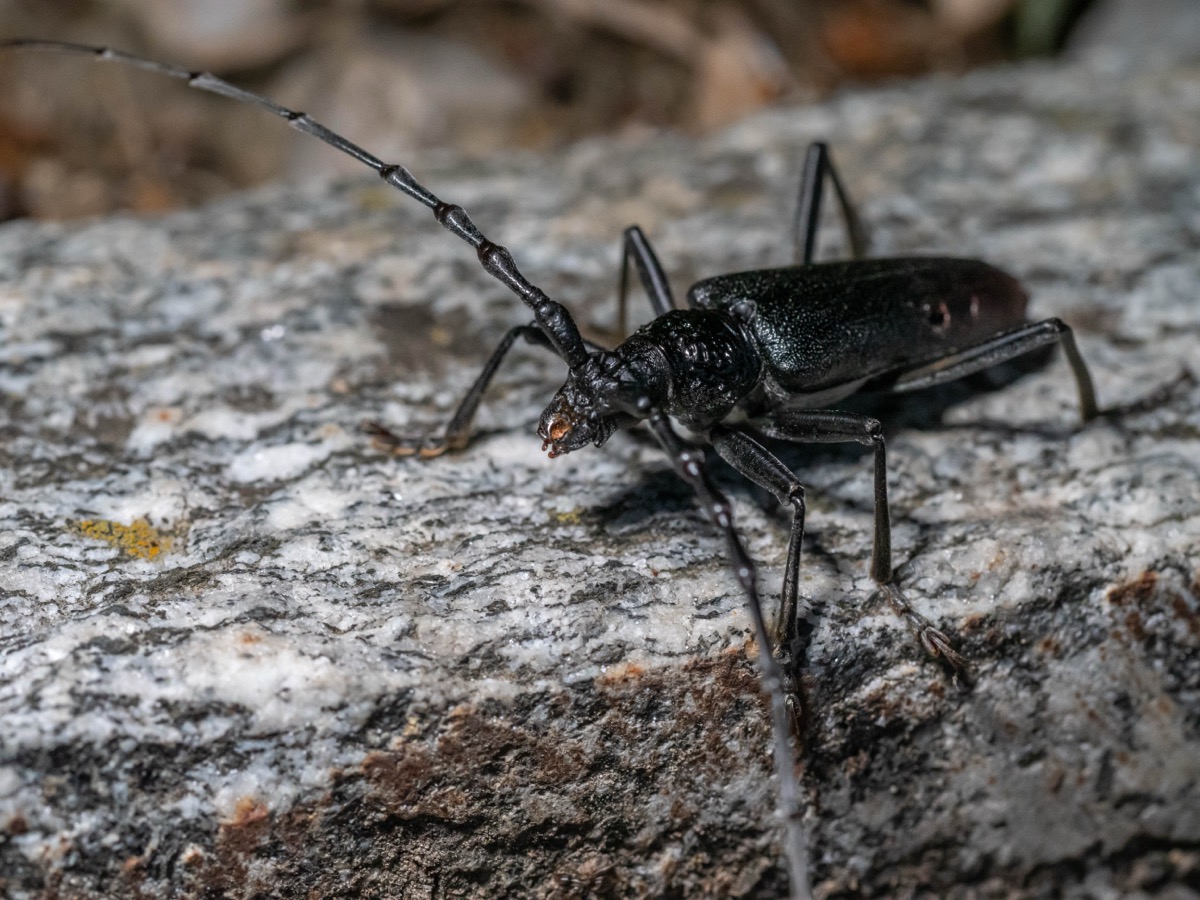
These beetles are impressive, mainly because they are either huge, several centimeters long, like the Great Capricorn beetle I encountered at the forest edge on a sidewalk, or they have a majestic appearance, such as Aristobia freneyi, which I saw in Khao Lak, Thailand in 2013, with its color, body spines, and “tufts” on the antennae.
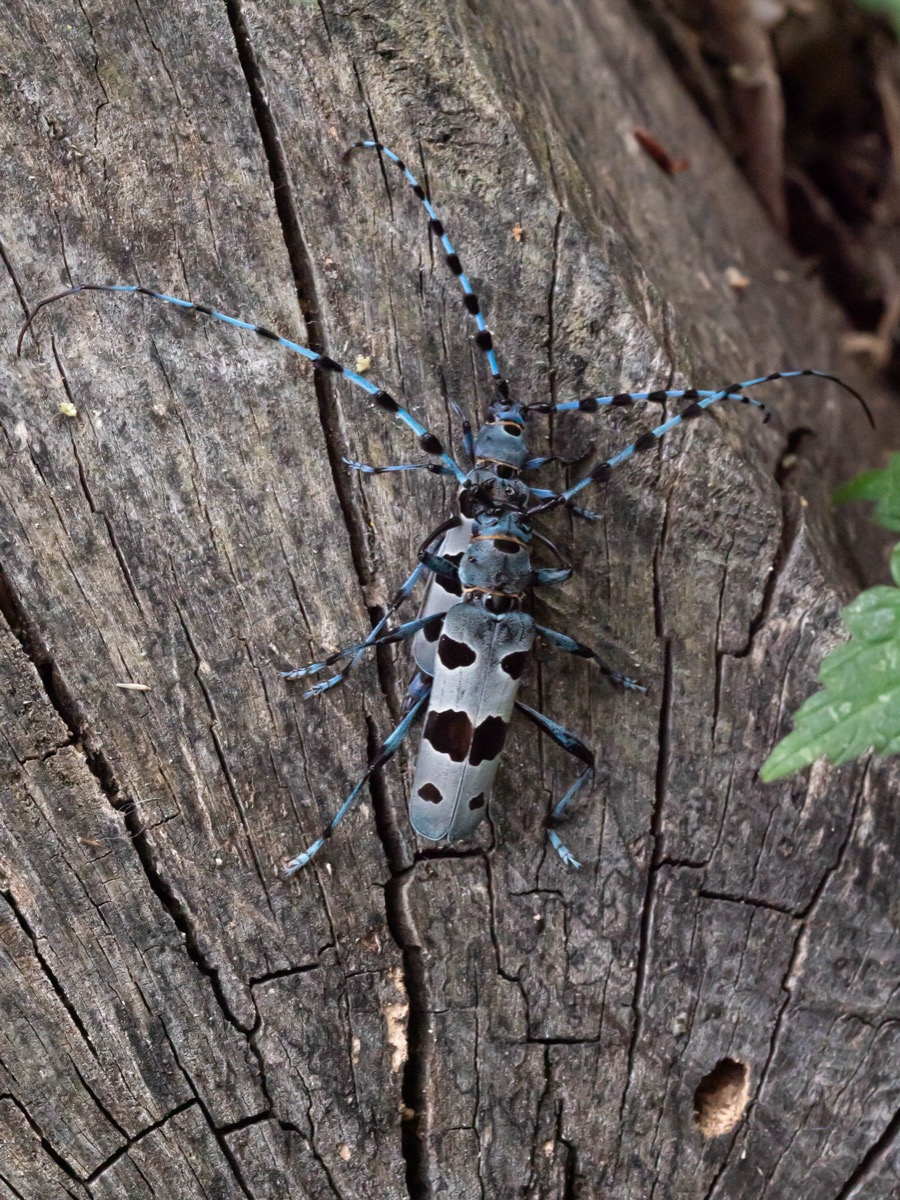
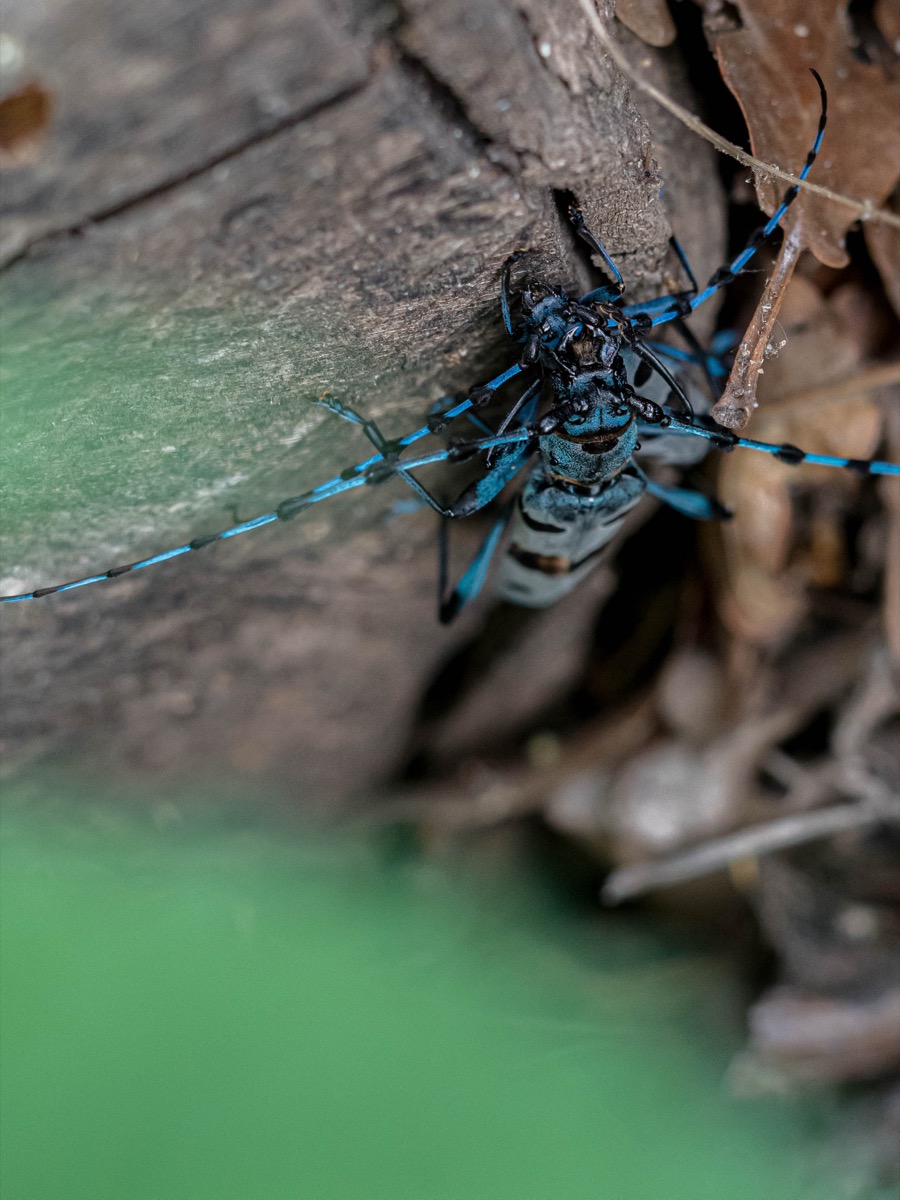
A particularly special encounter was with the only one I actively searched for… after some research and a few tricks to locate it… I’m talking about Rosalia alpina, the Alpine Rosalia. Magnificent!!!! And what colors!!!!
These species are endangered due to logging and habitat destruction. Among the conservation efforts, it is essential to preserve areas with dead wood and tall cut trunks for their reproduction.
Cerambycinae (subfamily)
Genus Cerambyx
Cerambyx cerdo – The Great Capricorn Beetle
| Order | Coleoptera |
|---|---|
| Family | Cerambycidae |
| Genus | Cerambyx |
| Species | Cerdo |
| Common name | Great Capricorn Beetle |
| Identifier | Linnaeus |
| Year identified | 1758 |
| Protected | Protected |
| IUCN category (2001–2003) | VU (vulnerable) |
| Habitat | Forests, edges and old wood |
| Diet | Oak |
| Color | dark brown to black |
| Antennae | Antennae exceed the apex of the elytra by four segments in males, and do not exceed the apex in females |
| Pronotum | spiny with strong irregular ridges |
| Elytra | reddish-brown / shiny, finely granular |
| Legs | |
| Range | Europe, Asia, North America |
| Minimum size | 24 |
| Maximum size | 62 |
| Period start | May |
| Period end | August |
IUCN: Vulnerable – Red List – 1996 / Profile / PDF / Protected species
Genus Rosalia
Rosalia alpina – The Alpine Rosalia
| Order | Coleoptera |
|---|---|
| Family | Cerambycidae |
| Genus | Rosalia |
| Species | Alpina |
| Common name | Alpine Rosalia |
| Identifier | Linnaeus |
| Year identified | 1758 |
| Protected | Protected |
| IUCN category (2001–2003) | VU (vulnerable) |
| Habitat | Altitude |
| Diet | Beech |
| Color | ash blue |
| Antennae | long, blue, with black silk tufts, 11 segments, significantly exceed the body length in males, with black hair tufts on segments 3 to 6 (segments 3 to 8 in females) |
| Pronotum | |
| Elytra | |
| Legs | |
| Range | Europe |
| Minimum size | 15 |
| Maximum size | 40 |
| Period start | June |
| Period end | September |
IUCN: Vulnerable – 1996 / Profile
Hard to miss when you see it. Its color and appearance are distinctive. It is a protected species and endangered.
Its natural habitats are mainly beech and willow trees.
Lamiinae (subfamily)
Genus Aristobia
Aristobia freneyi
| Order | Coleoptera |
|---|---|
| Family | Cerambycidae |
| Genus | Aristobia |
| Species | Freneyi |
| Common name | – |
| Identifier | Schmitt |
| Year identified | 1992 |
| Protected | Not protected |
| IUCN category (2001–2003) | Not classified |
| Habitat | |
| Diet | |
| Color | |
| Antennae | |
| Pronotum | |
| Elytra | |
| Legs | |
| Range | Thailand |
| Minimum size | |
| Maximum size | |
| Period start | February |
| Period end | December |
IUCN: Not classified

Lepturinae (subfamily)
Genus Oxymirus
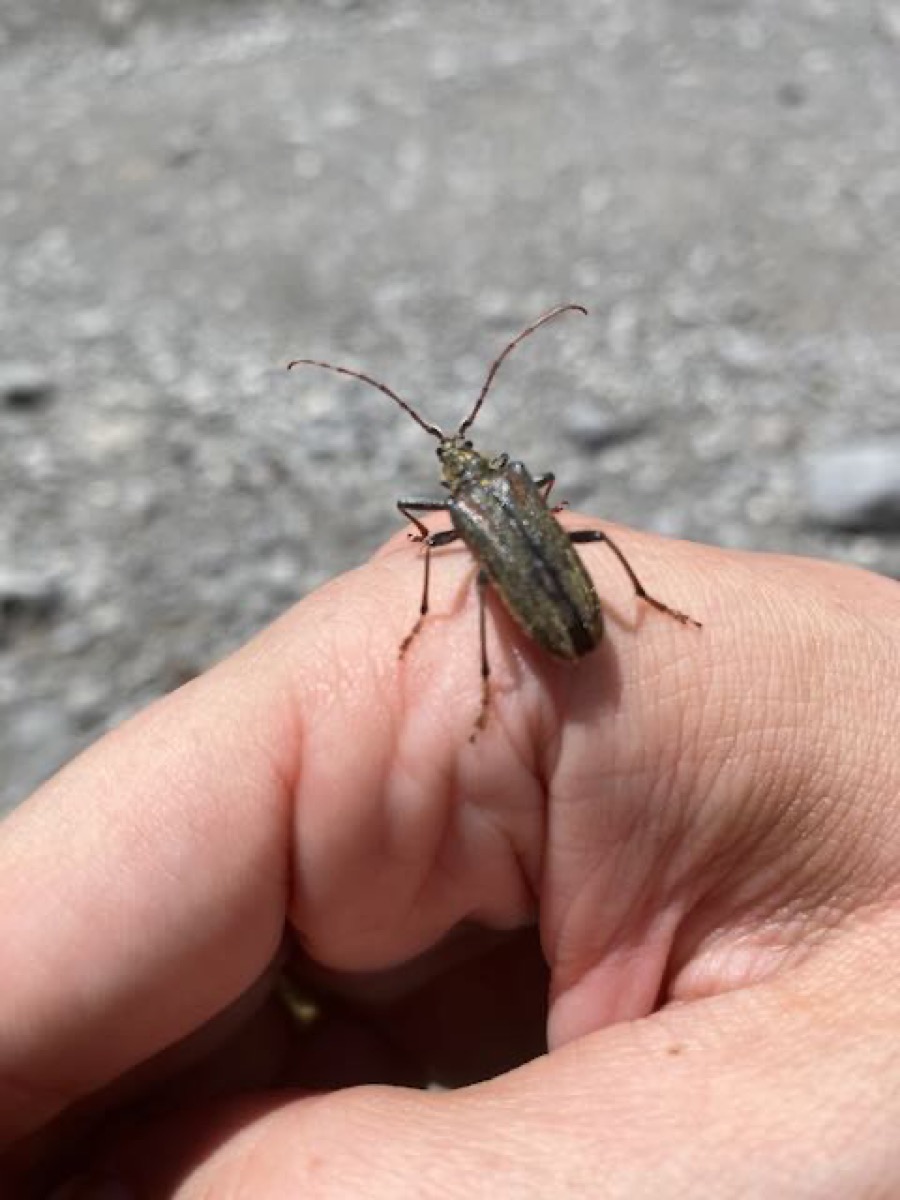
Oxymirus cursor – Runner Oxymire
| Order | Coleoptera |
|---|---|
| Family | Cerambycidae |
| Genus | Oxymirus |
| Species | Cursor |
| Common name | Runner Oxymire |
| Identifier | Linnaeus |
| Year identified | 1758 |
| Protected | Not protected |
| IUCN category (2001–2003) | LC (Least Concern) |
| Habitat | |
| Diet | |
| Color | |
| Antennae | |
| Pronotum | |
| Elytra | |
| Legs | |
| Range | Europe |
| Minimum size | |
| Maximum size | |
| Period start | |
| Period end | December |
Genus Rhagium
Rhagium mordax – The Biting Rhagium
| Order | Coleoptera |
|---|---|
| Family | Cerambycidae |
| Genus | Rhagium |
| Species | Mordax |
| Common name | Biting Rhagium |
| Identifier | De Geer |
| Year identified | 1775 |
| Protected | Not protected |
| IUCN category (2001–2003) | LC (Least Concern) |
| Habitat | dead wood |
| Diet | |
| Color | |
| Antennae | |
| Pronotum | |
| Elytra | |
| Legs | |
| Range | Europe, Asia, North America |
| Minimum size | |
| Maximum size | |
| Period start | |
| Period end |
IUCN: Least Concern – 2016 / Profile
